Custom crates are usually ordered when something goes wrong.
A damaged shipment, failed export inspection or a freight claim that costs more than the product itself.
After working with manufacturers, logistics teams, warehouse managers and exporters for over 20 years, a clear pattern has emerged: Most crate failures aren’t caused by weak materials, they’re caused by poor assumptions.
The Most Common Crating Myths We See
Myth #1: “If it’s overbuilt, it’ll be safe.”
In reality, overbuilt crates often drive up freight costs, slow handling and create new risks without actually improving protection.
Myth #2: “The crate will hold it in place.”
A strong outer crate means very little if the product inside can still shift, rub or absorb impact during transport.
Myth #3: “One crate design works for every job.”
Crates designed without considering real handling conditions; forklifts, stacking, vibration and transit distance are far more likely to fail.
Mistake #1: Assuming Stronger Always Means Better
One of the most common misconceptions around custom crates is that more material equals more protection.
In reality, overbuilding creates new problems:
- Higher freight costs due to excess weight
- Manual handling risks on-site and in warehouses
- Inefficient stacking and poor pallet utilisation
- Longer pack-out and unpack times
Crates should be engineered for the load. Strength needs to be applied where it’s needed.
At Rebul, crate strength is designed around:
- Load weight and distribution
- Stacking and compression requirements
- Handling method (forklift, pallet jack, crane)
- Transport distance and mode
Protection comes from design accuracy, not bulk.
Mistake #2: Focusing on the Crate, Not What’s Inside It
A strong outer crate means very little if the product inside can still:
- Shift during transport
- Absorb impact at weak points
- Rub, vibrate or tilt under load
This is where many crate solutions fail. Custom crates should always be designed as a system, combining:
- The outer crate
- Internal packaging supports
- Load restraint and positioning
Internal packaging supports often account for less than 10% of total packaging cost, yet influence the majority of damage outcomes. Ignoring this is one of the fastest ways to end up with repeat freight claims.
Learn more about engineered internal packaging support: https://rebul.com.au/internal-packaging-support-reduce-damage/
Mistake #3: Designing Without Considering Real Handling Conditions
Crates don’t move through ideal environments. They’re often stacked, dragged, forked, shifted in containers or stored in warehouses with varying floor conditions.
Yet many crates are designed without considering how they’ll actually be handled.
With over 20 years of industry experience, Rebul designs and manufactures custom crate solutions right here in Australia, built around real-world handling, not ideal conditions. We don’t offer a single crate type. We offer purpose-built crate systems, engineered to suit the product, transport method and risk profile.
Smart crate design considers:
- Fork tine entry points and access
- Structural base reinforcement
- Corner and edge impact zones
- Stack load direction and compression
- Stability during tilt or uneven lifting
Ignoring these realities often leads to damage that’s blamed on freight, when the root cause is design.
Explore Rebul’s Australian-made custom boxes and crate solutions: https://rebul.com.au/boxes-crates/
Mistake #4: Defaulting to One Crate Type for Every Job
Different shipments require different crate strategies. For example export machinery, high-value artwork, interstate furniture or tradeshow equipment.
Each comes with very different risk profiles.
That’s why Rebul designs:
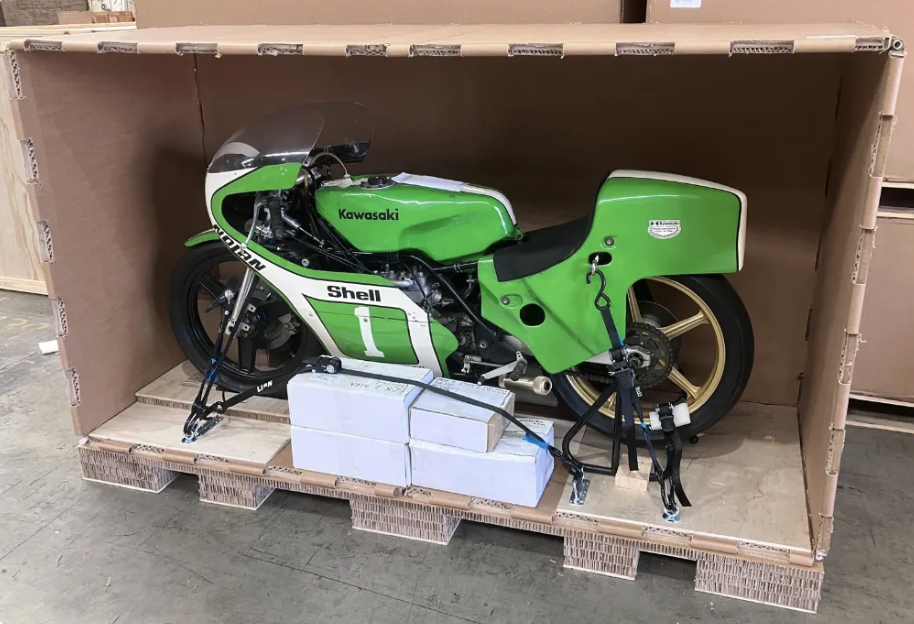
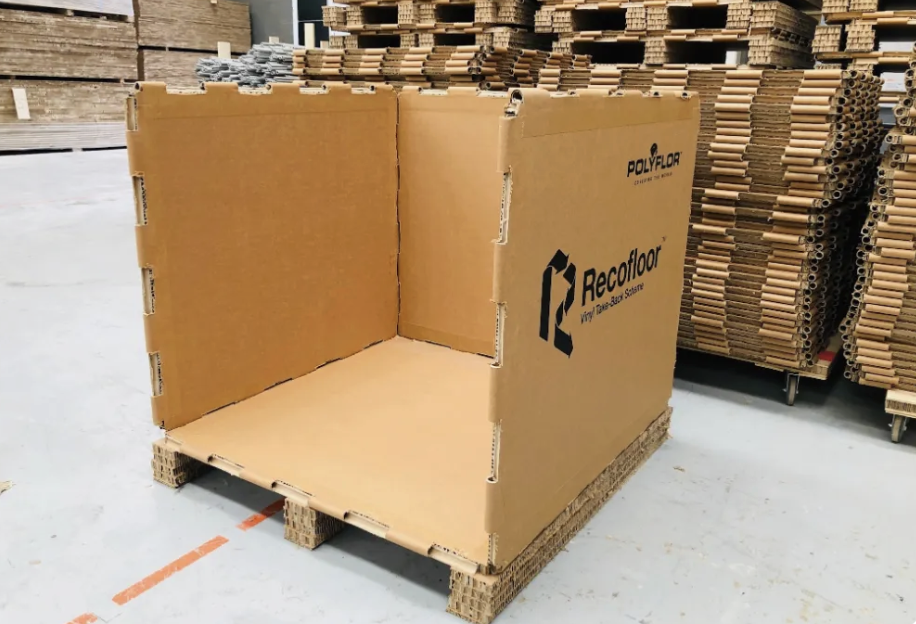
- Honeycomb crates for strength-to-weight efficiency and handling safety
- Custom timber crates where load, compliance or durability demands it
- Hybrid crate systems combining materials to balance protection, weight and cost
The mistake isn’t choosing one material over another, it’s choosing without understanding the job.
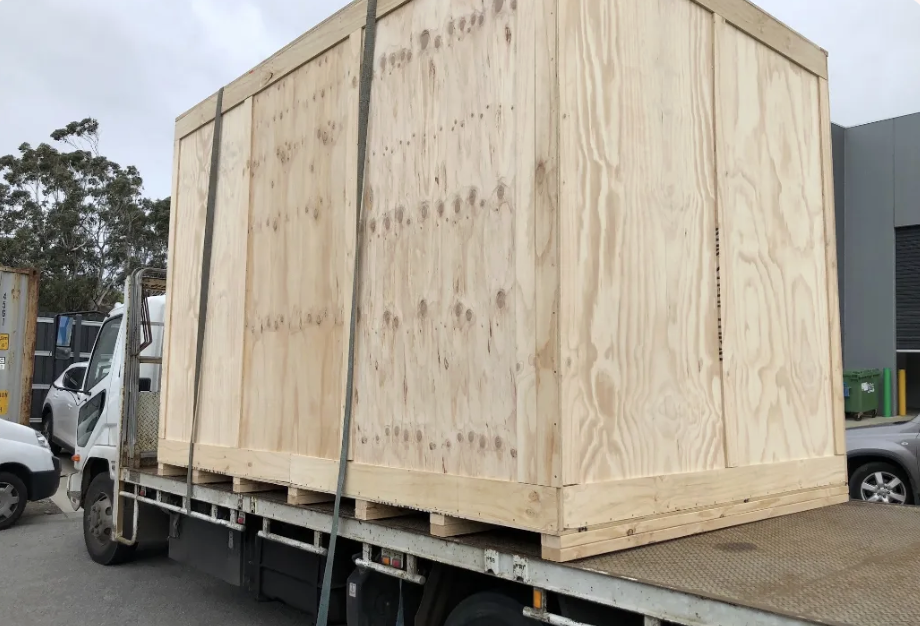
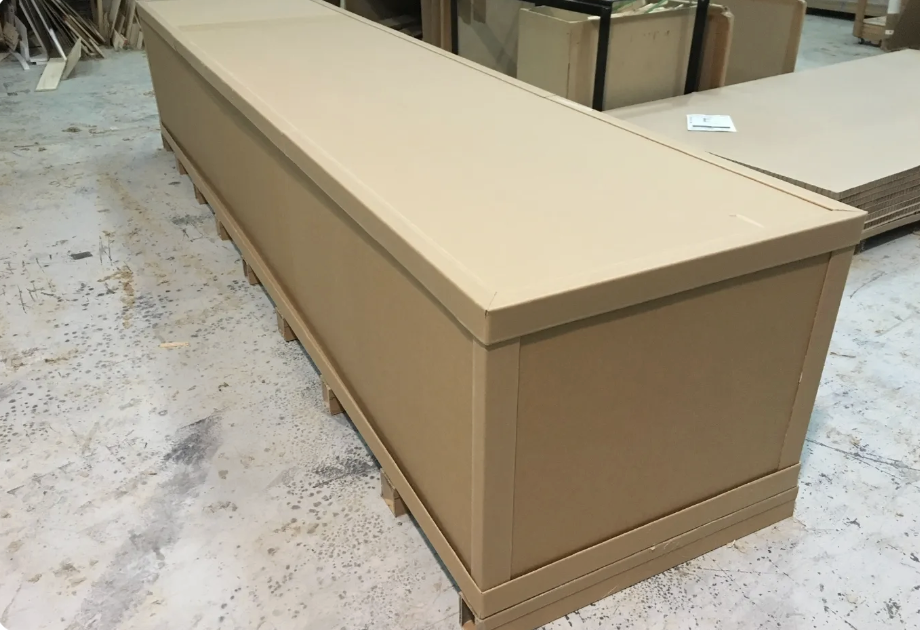
Explore Rebul’s custom crate solutions: https://rebul.com.au/custom-crates/
Mistake #5: Treating Crates as One-Off Purchases Instead of Assets
Many businesses design crates for a single shipment, even when:
- Goods move repeatedly
- Equipment is relocated between sites
- Tradeshow materials are reused
- Products are returned or redeployed
Reusable crate systems:
- Reduce long-term packaging costs
- Improve handling familiarity
- Minimise damage over time
- Reduce waste and storage inefficiencies
When designed properly, crates become logistics assets, not disposable packaging.
What Smart Custom Crate Design Actually Looks Like
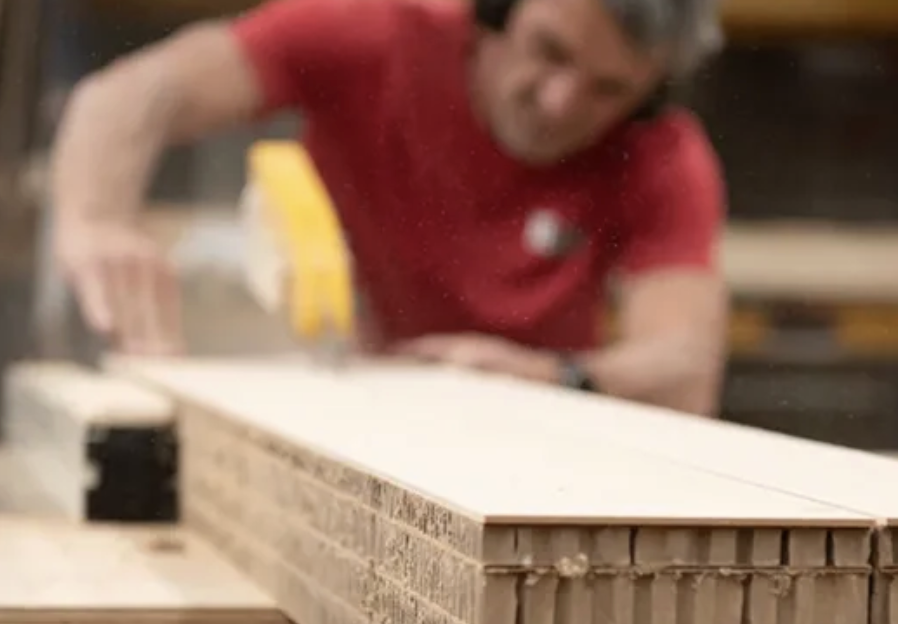
Effective custom crates are:
- Engineered for the product, not a template
- Designed around transport and handling conditions
- Supported internally, not just externally
- Sized for efficiency, not excess
- Built in Australia for speed, compliance and quality control
This is why businesses across manufacturing, logistics, arts, electronics and exports rely on engineered crate solutions, not catalogue products.
Is It Time to Rethink Your Crate Strategy?
If any of these sound familiar, it’s time:
- Repeated freight damage or claims
- Overweight shipments driving up costs
- Slow packing or unpacking times
- Compliance issues with export shipments
- Inconsistent protection across jobs
Custom crate design should remove problems, not create new ones.
Ready to Get Your Crating Right?
If you’re shipping high-value, fragile or heavy goods and want crates that actually work in real freight conditions, our experienced team at Rebul can help.
✔ Australian-made custom crates
✔ Honeycomb, timber and hybrid solutions
✔ Engineered for local, interstate and export transport
✔ Designed with internal support systems included
Talk to our team or request a quote: https://rebul.com.au/contact-us/
Custom Crate FAQs (Frequently Asked Questions)
Are custom crates only for export shipments?
No. Custom crates are commonly used for interstate transport, warehousing, tradeshows and repeat-use logistics, not just export.
Do custom crates have to be heavy?
Not at all. Weight depends on design and material selection. Many modern crates focus on strength-to-weight efficiency rather than mass.
Can custom crates be reused?
Yes. Many Rebul crates are designed for repeated use, flat packing and long-term storage.
Are Rebul crates made in Australia?
Yes. Rebul designs and manufactures crates locally, allowing for faster lead times, better quality control and tailored solutions